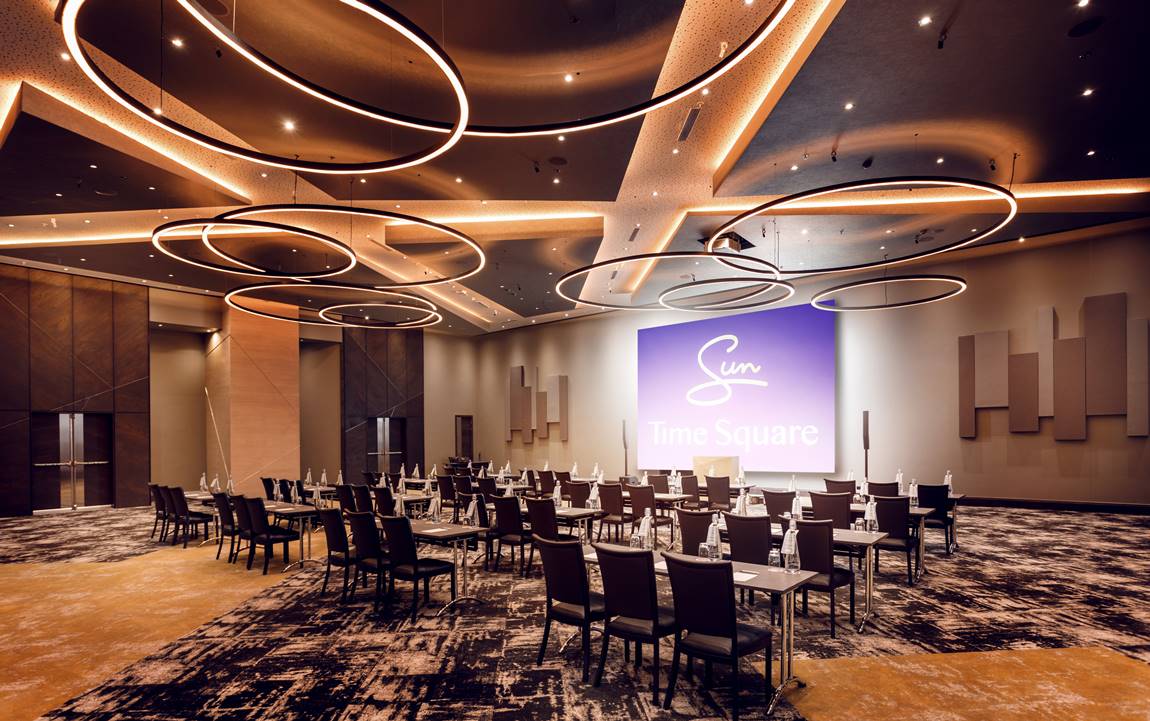
Whether your conference is for two people in one of the meeting rooms designed to inspire productivity and success, or well north of a thousand in the world class state-of-the-art SunBet Arena, with its four private hospitality suites and two meeting rooms which are ideal for seminars, exhibitions, product launches, press conferences or business banquets, the banqueting team at Time Square in Menlyn, Pretoria, will take care of the critical catering aspect.
The daily conference package is the standard entry into conferencing, which would include an arrival experience, a mid-morning break, a lunch, and an afternoon break, explains Sun International Group Executive Chef, Adrian Vaughan.
“From there we build packages within that space for dinners, canapé functions, bowl food…all sorts of different levels of experiences where we get quite creative, and most of the time, as much as we have a banqueting pack, oftentimes the guests will want something completely new – a dish never had by anybody else before,” he says.
“This presents a variety of different opportunities for us to be highly creative but also assist the clients with creating a memorable experience for their delegates.”
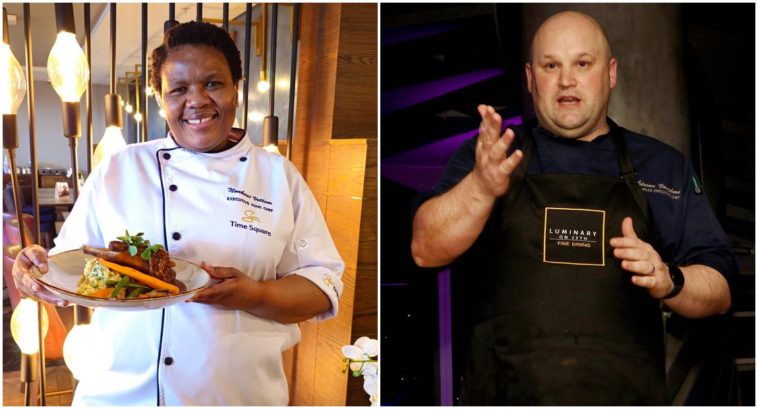
Executive Chef for Time Square, Nonkosi “Noni” Vellem, says her team welcomes these opportunities: “Guests can choose standard packages or ask for chefs’ choice, in which case the team comes together to put forward their ideas and stretch their creativity. It takes things to the next level, and we love it. We go full power!”
With multiple events happening simultaneously, often over several days, the kitchens will be staffed by seven chefs on the morning shift, and seven in the afternoon, who will cover dinners as well as prep for the next day. Noni herself will arrive at work at 6am and only leave when everything is done, which can be as late as 10pm. It’s a tough industry and not for everyone; Noni says she can quickly see who will make it and who will be looking for a new job after a few days.
When a conference lasts more than a day, even up to a week, or regular monthly meetings, there has to be variety. At its most basic, the arrival experience must have a vegetarian option. “We have fruits, some sweets,” says Noni. “For lunch there will be three proteins—red meat fish and chicken—two starches, two veg, plus a vegetarian dish, and a dessert station.”

In addition, there are breakfast menus, dinner menus, and a variety of global buffet options.
“We will take our standard menu and look at an aspect of it each month to try to create something unique and different, so if guests are coming in multiple months, they’re not getting the same thing every time,” says Adrian, adding that the same standard of service and quality still apply of course.
South African aspects come through in a biltong and cheese pastry, for example, or a hergzoggie tart. “Our menus are built around it being South African-influenced, with well-known items like milk tarts and oxtail potjies, and a lot of the menus built around fire and specifically around braai items,” says Adrian.
For large events, live fire or braai cooking experiences are created on the outside around the SunBet Arena, or the first floor pool deck, with guest interaction.
“Most of our daily conference packages go to Appetite because a lot of it is about mood, and moving people to a different space so they’re not seeing the same four walls the whole day,” says Adrian. “Appetite has beautiful huge windows and a lot of natural lighting, and there we can cook live and interact at various stations too.”
Staying on top of food trends is so important. “At the moment, we are on the healthy side with a lot of plant-based options. The chickpea falafel is very popular,” says Noni.
“We take a lot direction from the culture of street food, inspiration from a plant-based perspective, as well as classics from Europe and also the Middle East. Very healthy, very fresh,” says Adrian.
Think poke bowls, gochujang sauces, Korean influences, which are prevalent at the moment. “We take the nuances of these cuisines and try to make them uniquely South African. For example, how would we create a bunny chow but healthier with less bread?”
Fresh and nutritious are the cornerstones of what Noni and Adrian take into consideration when doing their planning. That, and to introduce an element of comfort and nostalgia in the food, something that will evoke warm memories. This means lots of vibrant fruit and vegetable, and not carbo loading with too many pastries and too much bread. “Ah yes, the bread. Guests who are gluten-intolerant must be accommodated too.”
“We try to include something that is homely but high level that will remind guests of favourite family meals,” says Adrian.
None of this happens by magic, though. Planning a conference begins with many meetings with the event coordinator and the client. They meet and greet, look at the multiple venue options depending on their needs, and when they get to deciding what to eat, that’s when Noni gets involved. There are so many questions: how many delegates, will they be out for dinner afterwards—that affects how much food is put out—and you can’t only count on the numbers, warns Noni. Just because 300 people ate very little last week, this week another 300 might eat everything in sight, which is just one of the fun challenges for her.
A great deal of time and energy is spent on this part of the process, and Noni will liaise directly with the client to finalise the menu. Logistics and ensuring a smooth flow of service, whether at the table or a buffet, are the marks of a successful conference.
Sometimes, particularly when there are last-minute changes, or newly-discovered dietary requirements, or an increase in the number of attendees, it can be overwhelming, but for this five-star crew, the happiness and full bellies of their guests is the reward.